
Explore Our PoliSeries
The PoliSeries is a sequential collection of political reports, freely accessible on this site, designed to empower the discerning South African citizen to make informed, self‑responsible voting decisions grounded in long‑term national prosperity. It examines each parliamentary party’s manifesto, focussing primarily on their positions on land reform, and evaluates their proposals through constitutional logic and pragmatic foresight, giving readers the clarity to see beyond political messaging and understand the real implications of policy. When read in full, the PoliSeries forms Vote for Yourself, a cohesive political education initiative now also available in print, structured for those ready to engage deeply with governance and their own role within it.
Click on a party below to read its report:

















Most of these reports are collectively available to you in one book: Vote for Yourself – see below.
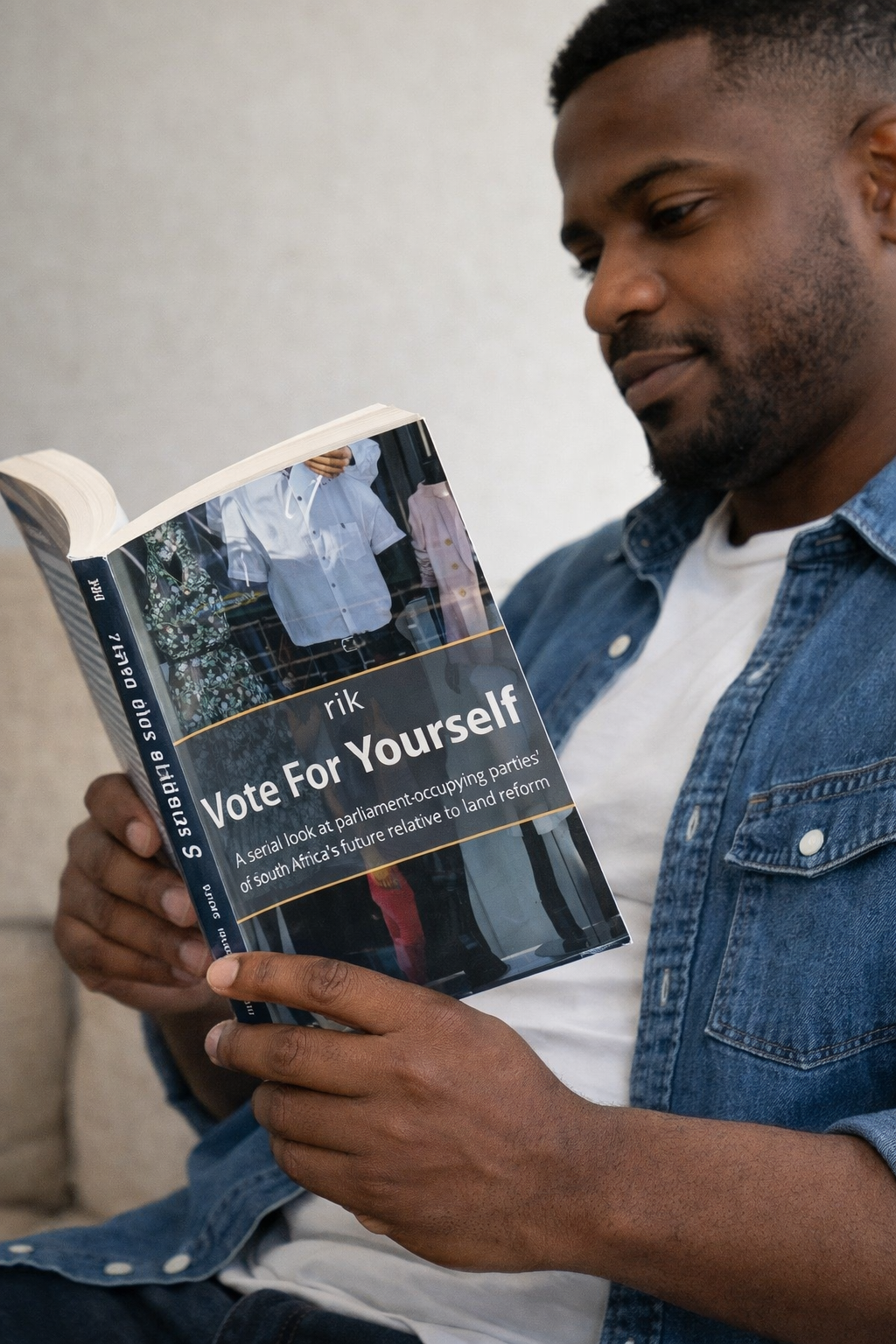
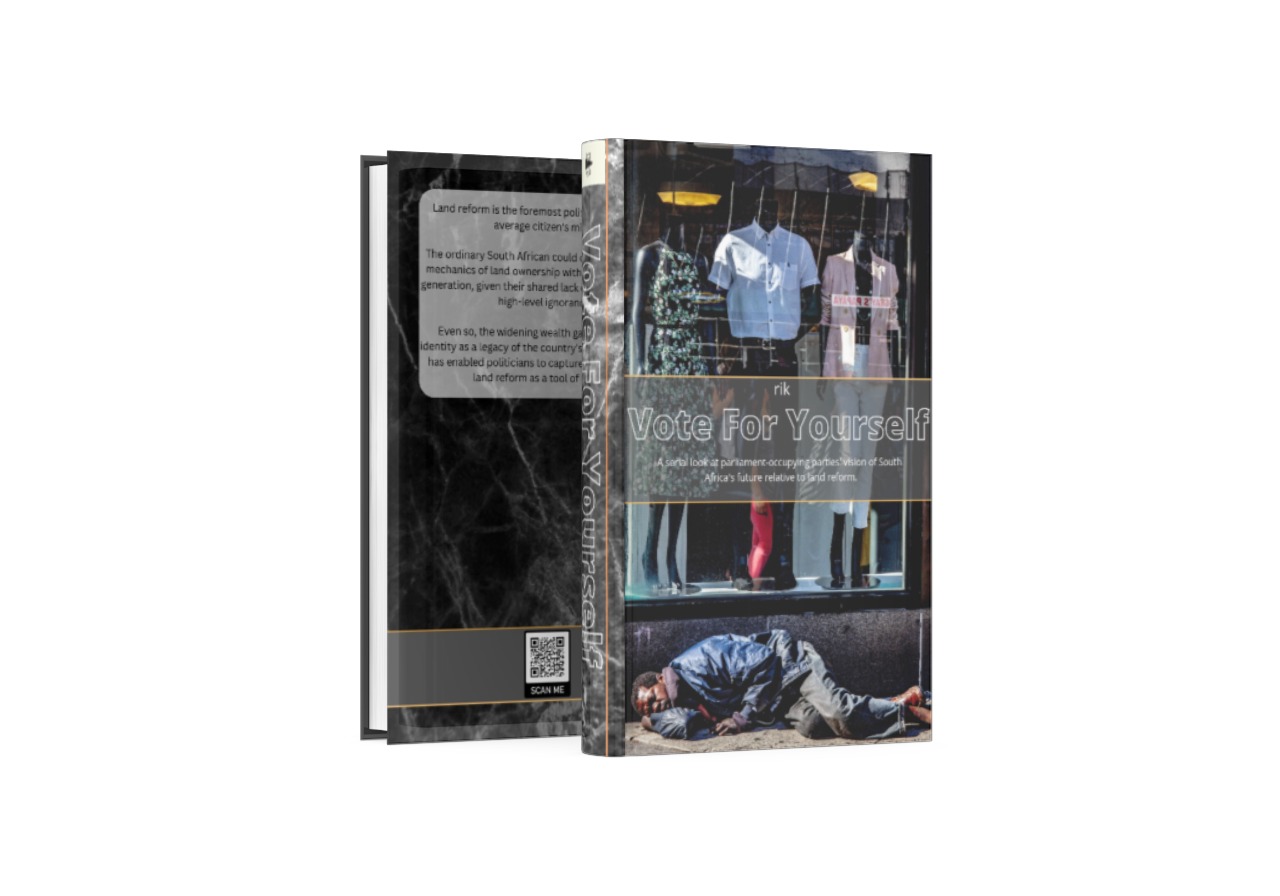
Vote for Yourself is a politically reflective and analytical work focused on the role of land reform in shaping South Africa’s future. Framed as the first in a “Divinity Series,” the document serves to educate and provoke thought, encouraging South Africans to move beyond party loyalty and instead engage in critical, self-responsible citizenship.
Function:
The document functions as an independent assessment of political parties currently in parliament. It examines each party’s policies—particularly around land reform—as a way to understand their vision for the country and to evaluate the sincerity and viability of their promises. Through this exploration, it seeks to equip readers with the insight needed to make informed electoral decisions.
Purpose:
The book aims to awaken political self-awareness. Rather than continuing to vote based on struggle credentials or propaganda, the author challenges citizens to reclaim their agency by interrogating the truth behind political manifestos. The document positions land reform not only as a policy issue but as a symbol of broader social, historical, and psychological fractures in South Africa. It seeks to dismantle the illusion that salvation lies with political figures, urging the reader to “vote for yourself” by choosing truth, responsibility, and action over dependence and denial.
Message:
The central message is one of self-responsibility. The author argues that political dysfunction is a reflection of the electorate’s failure to demand better, driven by collective denial of uncomfortable truths about power, race, class, and historical trauma. Land, as both a physical and symbolic resource, becomes a lens through which the health of societal relationships is assessed. The book challenges the reader to recognize the continuation of inequality and systemic failure, and to act as a sovereign political being, rather than a passive consumer of promises.
Content and Structure:
The document begins with a preface and thematic introduction, framing the issue of land as core to South Africa’s unresolved past and its contested future. It outlines the psychological and societal consequences of mishandled land reform and makes a compelling argument for honest political engagement.
The bulk of the book consists of 22 chapters, each dedicated to a political party. These include major parties like the ANC, EFF, and DA, as well as smaller or emerging entities. Each chapter offers an in-depth but accessible critique of the party’s position on land reform, drawing from official manifestos and public statements. The author supplements this with personal insights, critical analysis, and provocative questions, encouraging readers to consider not only what is said but what is left unsaid.
Vote for Yourself is more than a political guide—it’s a call to personal and collective awakening. It demands that South Africans reflect on their role in shaping the nation and accept the difficult truth that sustainable change begins with them.